This is default featured post 1 title

Go to Blogger edit html and find these sentences.Now replace these sentences with your own descriptions.

This is default featured post 2 title

Go to Blogger edit html and find these sentences.Now replace these sentences with your own descriptions.

This is default featured post 3 title

Go to Blogger edit html and find these sentences.Now replace these sentences with your own descriptions.

This is default featured post 4 title

Go to Blogger edit html and find these sentences.Now replace these sentences with your own descriptions.

This is default featured post 5 title

Go to Blogger edit html and find these sentences.Now replace these sentences with your own descriptions.

الخميس، 3 سبتمبر 2015

Chip Kelly's field-goal indecision cost the Eagles a chance to win on 'Monday Night Football'


Chip Kelly’s decision to try for a 44-yard field goal with just under three minutes remaining in the Philadelphia Eagles 2015 debut wasn’t the problem. Yes, you’d think if there was one NFL coach who would might have gone for fourth-and-1 on his opponent’s 26-yard line while down two points, it’d be Kelly, particularly with how well his offense was moving in the second half. But there are certainly merits to keeping all your timeouts and going for a fairly easy field goal that would have given his Eagles a one-point lead. While not the wild-card move you’d expect from the freewheelin’ Chip Kelly, it was a perfectly reasonable play call.
No, the problem was that Kelly took far too long in deciding it. The indecision caused a rushed snap, hold and kick. It didn’t mean Cody Parkey’s boot was going to miss, but it didn’t help it.
Ryan Mathews was stuffed on third-and-1 with 3:08 left in the game. The 40-second play clock started immediately. Tick, tick. The offense lingered on the field. Sam Bradford looked toward Kelly, like he was expecting the “go for it” signal from the sideline. Tick, tick: Ten seconds had already elapsed. There were 30 seconds on the play clock.

Kelly conversed with special teams coach Dave Fipp and his kick unit. The coach moved his arms back and forth in an indecisive way, clearly unsure of what to do, even though it now appeared he’d kick the ball to take the lead. Tick, tick. At 27 seconds he seemed to make the decision to send on the field-goal unit, but he wasn’t sure about it. Confusion reigned. Tick, tick. At 23 seconds, the six-man unit finally starts its jog onto the field for the kick.
Tick, tick: The unit passed Bradford and his receivers, still quite close to the Eagles sideline with 19 seconds on the play clock. There wasn’t much rush. At 13 seconds, Parkey took his first warm-up kick, like a golfer stretching out with a waggle on the opening tee. At 10 seconds, he started marking off his distance while holder Donnie Jones got in position. Tick, tick.
It wasn’t until five seconds were left on the play clock that Parkey got fully set, though watching live it was clear he wasn’t comfortable. With three seconds left, the ball was snapped and it was wide-right immediately off the foot.

الأربعاء، 2 سبتمبر 2015

Giants thrown for loop by Eli Manning telling Rashad Jennings not to score


Though New York Giants coach Tom Coughlincontinues to take responsibility for a catastrophic collapse in Sunday night’s 27-26 loss against the division-rival Dallas Cowboys, he made it clear that someone else was to blame: quarterback Eli Manning.
During a conference call with reporters, the Giants confirmed that running back Rashad Jennings had been instructed not to score late in the game when the Giants held the ball near Dallas’ goal line with a three-point lead.
“That was not instructed from the sidelines,” Coughlin said Monday during the call. “In talking with Eli today, I think he was confused by the number of timeouts that were remaining. His intention was, with one timeout, that we would milk the clock as best we could. However, they had two timeouts left.”
Coughlin later added: “My intent was to be up 10.”
With the ball on the 4-yard line and just fewer than two minutes to play, the Giants handed the ball off to Jennings on first and second down. Jennings told ESPN in an interview that on one of the plays, he “cut the wrong way [on purpose] and found somewhere soft to fall” in order to follow Manning’s directions.
“I thought they only had one timeout,” Manning said during the call. “I told Rashad, ‘If they let you score, go down at the 1-inch line.’ ”
Before the second down play just seconds later, Manning went to the sideline and informed the Giant coaches about what he told Jennings. When he returned to the huddle, the instructions were the same.
“I thought we were on the same page and I was wrong,” Manning said. “That was my mistake.”
That wasn’t Manning’s only one.
On the next play, a crucial third-and-goal from the 1-yard line, he took a play action snap and retreated to avoid Dallas’ pass rush, before eventually throwing the ball out of bounds. The clock stopped with 1:43 left in the game. Rather than to take a sack, Manning’s incompletion saved Dallas about 40 seconds.

الثلاثاء، 1 سبتمبر 2015

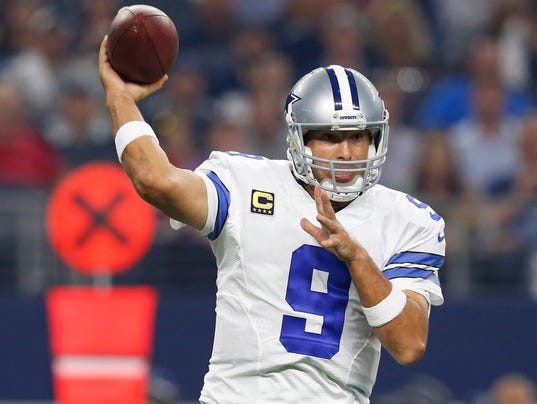
Bell: Without Dez and DeMarco, Cowboys' Tony Romo can finally prove MVP worth


For a split second, it looked like another dose of disaster to fuel the haters.
The snap was low, in the turf. But with the game — and a miraculous comeback on the line in the waning seconds Sunday night — Tony Romo didn't flinch.
Instead, the most scrutinized quarterback in America calmly scooped up the football, regained his rhythm, set his feet and fired the game-winning touchdown pass over the middle to his most trusted target, tight end Jason Witten.
It was also a clear snapshot of how the Dallas Cowboys might survive in the coming weeks without their most dangerous weapon. Yes, Romo will have to get it done.
Dez Bryant's tweet later in the night said it all: "I'll be back soon but how about 9????????"
That would be Romo, No. 9, who suddenly has added layers of adversity and responsibility on his plate while Bryant rehabs from surgery for a broken bone in his foot.
What a sudden identity shift for the Cowboys. But that's the NFL — a fire here, a flood there. Adapt or else.
When the Cowboys head to Philadelphia this weekend for an early showdown to determine NFC East supremacy, the running back who took so much pressure off Romo by winning the rushing crown last season, DeMarco Murray, will be lining up for the hated Eagles. And the receiver who torched the since-overhauled Eagles secondary for three touchdowns in the December game at the Linc that essentially determined 2014 the division crown will be home with his foot in a cast.
So now it's on Romo to keep his team moving.
No doubt, he's well-equipped on multiple levels. Since he became a starter in 2006, no quarterback in the NFL has directed more game-winning touchdown drives. The march Sunday night, aided by New York Giants blunders (the Cowboys were out of timeouts) that left Romo extra time to work his magic, marked his 28th such victory drive.
He's also equipped to handle the upcoming grind mentally. Romo has had some last-minute mishaps over the years, which his detractors cite to suggest he can't win the big one. But in reality, he gets a bad rap. More often than not, as demonstrated against the Giants, Romo is clutch.
It's tough to imagine that he can be under the microscope any more than he has been while playing for arguably the most high-profile team in the NFL. But it's possible. Over the next few weeks, Dallas needs Romo to excel with the no-name targets flanking Witten. That's what the great ones can do for a team, and Romo has been there before.

Carlos Hyde, 49ers overshadow Adrian Peterson's return in 20-3 victory


SANTA CLARA, Calif. — Adrian Peterson showed flashes of his former MVP self in Monday night's opener. But there weren't nearly enough to save the Minnesota Vikings.
The San Francisco 49ers spoiled Peterson's return with a 20-3 triumph in which Carlos Hyde, not Peterson, was by far the most productive running back on the field at Levi's Stadium.
Peterson left an impression. Just look at the short pass he caught around his own 40-yard line in the second quarter before juking one Niners defender and then carrying three more for about 8 yards before another jumped on his back to bring him down after a gain of 17.
But Peterson's final stat line — 10 carries for 31 yards, plus three catches for 21 yards, no scores — reflected how badly he and the Vikings struggled to get anything going offensively behind an injury-depleted line.
Meanwhile, Hyde ran wild, scoring both San Francisco touchdowns and finishing with 168 yards on 26 carries (plus two catches for 14 yards). After one game, that puts the second-year pro from Ohio State on pace for almost 2,700 rushing yards — beyond the record-shattering goal of 2,500 that Peterson has set for himself publicly.
Peterson, 30, didn't play at all this preseason after missing all but one game in 2014 in the wake of a felony indictment for injuring his 4-year-old son with a wooden switch. He pled guilty to a reduced misdemeanor charge in November, but the NFL barred him from playing last season.
The Vikings passed all three plays on their opening possession Monday. So, Peterson's first carry in a game since Sept. 7, 2014, came on the first play of the Vikings' second drive. It went for 4 yards. He had four carries for 14 yards and two catches for 19 at halftime.
With hundreds of purple-clad fans amidst the early-arriving crowd, Peterson heard mostly cheers as he emerged from the tunnel, though one man in the crowd yelled "Child beater!" on multiple occasions.
The Vikings named Peterson one of their captains for the game, along with Teddy Bridgewater, Chad Greenway and Everson Griffen.

الاثنين، 10 أغسطس 2015

New Jersey man arrested and charged with conspiring to support ISIS

A former New Jersey resident has been arrested and charged with allegedly conspiring and attempting to provide support to the Islamic State, the U.S. Department of Justice said Monday.
Nader Saadeh, 20, a former Rutherford, N.J., resident, was expected to appear before a federal judge Monday afternoon.
The charges against Saadeh stem from an FBI investigation into a group of individuals from the New Jersey-New York area. Saadeh is the sixth man to be arrested in the two-state sting. His brother, Alaa Saadeh, was arrested on June 29.
Federal investigators say Saadeh sent “electronic messages” between 2012 and 2013 that expressed his anger and hatred for the United States. At that time, he also expressed interest in forming “a small army” that would include his friends. He also, reportedly, posted images of the black and white ISIS flag on his Facebook page in 2014.
According to an informant working with the FBI, Saadeh told friends in April 2015 that he was preparing to travel overseas. It was around that same time authorities say Saadeh became a “radicalized supporter” of ISIS and expressed solidarity with those behind the terror attacks in Paris. In that attack, 12 people were killed at the offices of Charlie Hebdo, a French satirical magazine that published controversial cartoons about the prophet Muhammad.
The investigation into Saadeh started when a friend, identified as “individual 1” in court documents, contacted the FBI and expressed concern that Saadeh, his brother and their friends were planning a trip overseas where they might join a terror group.
Individual 1 told investigators that Saadeh’s interest in ISIS as well as his “adoption of stringent religious behavior” coincided with other statements he made in support of ISIS.
Investigators say they also obtained emails from April 2015 that were sent to Saadeh by family members, including one from his mother, begging her son not to join the terror group.
A third New Jersey resident, Samuel Rahamin Topaz, was arrested on June 17, 2015. Topaz was also charged with conspiring to provide material support to ISIS.
In a post-arrest interview, Alaa Saadeh, told authorities his brother Nader and Topaz watched ISIS propaganda videos together and discussed going overseas to join the group.
Saadeh, a dual U.S.-Jordanian national, got on a May 5 flight from New York to Amman, Jordan. He was detained upon arrival, though it was not immediately clear when he was returned to the United States.
If Saadeh is found guilty, he could face up to 20 years in prison and a fine of $250,000.

الأحد، 9 أغسطس 2015

Executions likely go on despite strong Supreme Court dissent


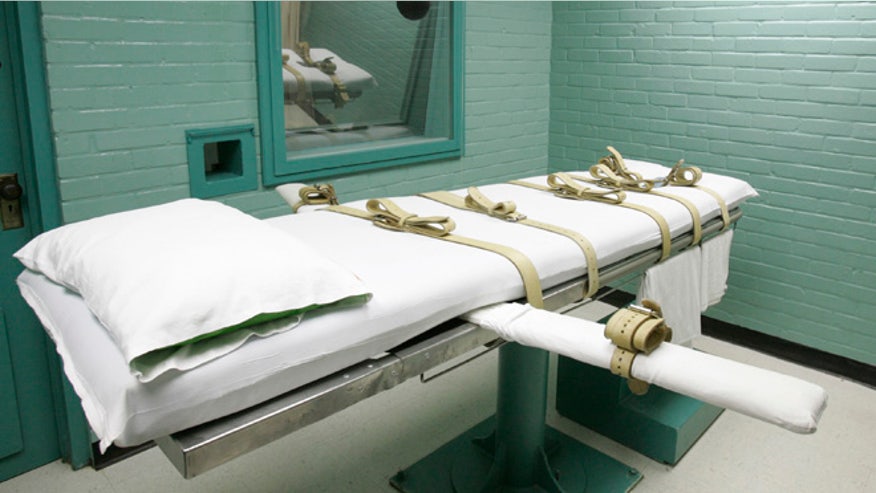
Wherever their summer travels have taken them, Supreme Court justices probably will weigh in on Texas' plans to execute two death row inmates in the week ahead.
If past practice is any guide, the court is much more likely to allow the lethal-injection executions to proceed than to halt them.
Opponents of the death penalty took heart when Justices Stephen Breyer and Ruth Bader Ginsburg made the case against capital punishment in late June as arbitrary, prone to mistakes and time-consuming. Even if death penalty opponents eventually succeed, the timeline for abolition probably will be measured in years, not months.
That's because Breyer, joined by Ginsburg, was writing in dissent in a case involving death row inmates in Oklahoma, and five sitting justices, a majority of the court, believe "it is settled that capital punishment is constitutional," as Justice Samuel Alito wrote in his opinion for the court in that same case.
Texas has scheduled back-to-back executions Wednesday and Thursday for Daniel Lee Lopez and Tracy Lane Beatty.
Lopez was convicted of running over a Texas police officer with his car during a high-speed chase. Lopez' lawyer already has asked the court to stop the execution.
Beatty strangled his 62-year-old mother, then stole her car and drained her bank accounts. He has an appeal pending in lower courts and could also end up at the Supreme Court.
The justices rarely issue last-minute reprieves to death-row inmates. Even after Breyer's opinion calling for a re-examination of capital punishment by the Supreme Court, no justice publicly backed a Missouri inmate's plea to halt his execution to allow the court to take up the constitutionality of the death penalty.
Similarly, the three Oklahoma inmates who lost their high court case now face execution in September and October and want the justices to reconsider the decision from June in light of Breyer's dissent. The court almost never does that.
The heightened attention on the death penalty comes amid declining use of capital punishment in the United States, and a sharp drop in the number of death penalty prosecutions.
The 18 executions that have taken place so far this year have been carried out in just five states -- Texas, Missouri, Georgia, Florida and Oklahoma. Nine of those were in Texas. Twelve states with the death penalty have not had an execution in more than five years. That list includes California and Pennsylvania, which between them have more than 900 death row inmates.
The relatively small number of states that actively seek to carry out death sentences underscores what Ginsburg characterized in late July as "the luck of the draw."
"If you happen to commit a crime in one county in Louisiana, the chances you will get the death penalty are very high. On the other hand, if you commit the same deed in Minnesota, the chances are almost nil," she said at a Duke University law school event in Washington.
Texas is far and away the leader in carrying out executions, but it too has seen a drop in the number of new inmates on its death row. No new death sentences have been imposed in Texas this year, said Robert Dunham, executive director of the Death Penalty Information Center.
Geographic disparity was among several defects Breyer and Ginsburg identified in June. Another is the length of time many inmates spend living under a sentence of death, which Breyer had previously suggested also might be a violation of the constitutional ban on cruel and unusual punishment. Six of the 18 men who have been executed in 2015 spent at least 20 years on death row, including one who served 31 years before his execution.
Yet for all the systemic problems opponents of capital punishment can cite, they also have to reckon with what death penalty opponent Michael Meltsner called the "world of brutality and the awful capacity of people to commit violent crimes." One example: The Justice Department, which has otherwise advocated for criminal justice reforms during the Obama administration, won a death sentence in the case of convicted Boston Marathon bomber Dzhokhar Tsarnaev.
"When awful things happen, people don't think about the costs and benefits. They react to circumstances. There is an ambivalence that has tracked the death penalty debate for many years," said Meltsner, a Northeastern University law professor and experienced civil rights lawyer.
Among the questions surrounding the possibility that the Supreme Court would take up the constitutionality of the death penalty is the makeup of the court itself.
With four justices in their late 70s or early 80s, the next president might have the chance to fill several vacancies and could change the court's direction.
"Obviously, the composition of the court matters greatly and the biggest unknown variable about the life of the American death penalty is the presidential election of 2016. My expected time frame for constitutional abolition varies greatly based on the result," said Jordan Steiker, a University of Texas law professor.
It took Breyer and Ginsburg more than 20 years on the Supreme Court to voice their doubt about capital punishment. Justices Harry Blackmun and John Paul Stevens likewise spoke out at the very end of their time on the court.
Steiker said he thinks Breyer's dissent will serve as a road map for death penalty lawyers and future justices who may not feel constrained to wait before grappling with executions.
"It was invigorating to those who'd like to see constitutional abolition," he said. "The arguments not new, but they had not been marshaled as effectively by a justice until this opinion."

السبت، 8 أغسطس 2015

Why the Fox Debate is taking hits from Donald Trump’s fans


The attacks by Donald Trump and his followers on the Fox News debate have raised a really important question:
What, exactly, is the role of moderators in a presidential debate?
Or to take a broader view: What is the role of journalists, period?
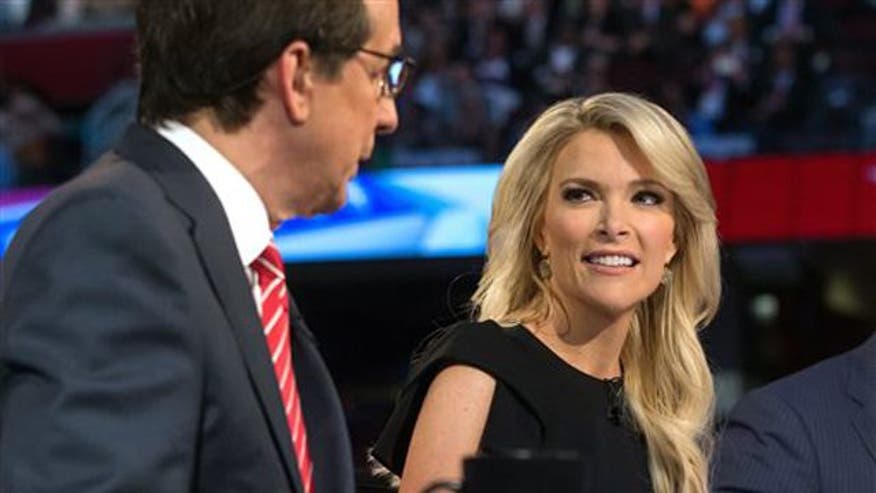
Many in the mainstream media, including such luminaries as Katie Couric, Andrea Mitchell and Jeff Greenfield, have praised the tough questioning by Megyn Kelly, Bret Baier and Chris Wallace. Perhaps most striking was this piece by liberal New York Times columnist Frank Bruni:
“They took each of the 10 Republicans onstage to task. They held each of them to account. They made each address the most prominent blemishes on his record, the most profound apprehensions that voters feel about him, the greatest vulnerability that he has.
“It was riveting. It was admirable. It compels me to write a cluster of words I never imagined writing: hooray for Fox News.”
But many conservative commentators, led by Rush Limbaugh and Mark Levin, have criticized Fox over the debate. What’s telling is that some portion of the Fox audience, at least according to Twitter and Facebook, is also unhappy.
Now some of these are fierce Trump partisans who are ticked when anyone challenges him on anything. Others were disappointed with the overall tone of the Cleveland event.
“The only reason Fox had high ratings was because of TRUMP and he’s the very one they tried to tear down. Thanks for Trump for your ratings, it sure wasn’t the so-called journalists,” one person said.
Another wrote that “those questions were inappropriate and vicious by Fox.”
These were offset by many others who praised the moderators’ performance, but let’s look at what some found “vicious.”
Trump was asked whether he would pledge to support the GOP nominee (after raising the potential for an independent bid in numerous interviews); about his own derogatory words about women; why he once supported single-payer health care; his evidence that Mexico is sending rapists into the United States; the Iran nuclear deal, and why he once supported abortion rights.
Jeb Bush was asked what he would say to families of those who died in “your brother’s war.” Scott Walker was asked about flip-flopping on immigration. Ben Carson was asked about his political inexperience. Marco Rubio was asked if abortion should be allowed in cases of rape and incest. And on and on.
These were aggressive questions, no doubt about it. They were painstakingly framed to elicit substantive answers from the candidates.
How would some of these detractors have reacted if the same sort of debate questions had been asked of Hillary Clinton, Bernie Sanders and Martin O’Malley? (We won’t get to find out, as the DNC has not awarded Fox one of its six debates.)
In other words, are the critics upset because they think the Fox anchors tried to put the Republican candidates on the defensive?
Of course, critics sometimes shout the loudest, and social media give them a big megaphone. But the 24 million Americans who watched--those are World Series numbers, even if many tuned in for the Trump Show--saw the candidates having to hit major-league pitching, not giving a scripted speech or appearing in a paid commercial. 
It’s fine to criticize the moderators of any debate, and it’s fine to criticize Fox. But some of these cries of “I’ll never watch Fox again” seem disproportionate for a debate that was highly praised by most journalists.
Anchors are supposed to be tough in interviews and at debates, and not just to produce “good television.”
Provocative debate questions are nothing new. In 1988, CNN’s Bernard Shaw began by asking Michael Dukakis whether he would support the death penalty if his wife was raped and murdered. Dukakis’ impassive response sealed his fate.
In 2012, CNN’s John King began by asking Newt Gingrich about an ex-wife’s account that he was having an affair and asked her for an open marriage. Gingrich thundered against “the destructive, vicious nature of much of the news media.”
The great interviewers like Tim Russert, who was a Democratic operative before joining NBC, know full well about pressing the pols. Russert said in 2007 that the founder of “Meet the Press,” Lawrence Spivak, once told him that “that the job of the host is to learn as much as you can about your guest’s positions and take the other side.”
Having watched Megyn, Bret and Chris spend hours preparing for the debate, I know they took great pains to be fair. In fashioning a question about a story that Fox had just broken, Baier made sure to say the candidates on stage might not be aware of it so there would be no implication that they were just uninformed.
The team was led by Bill Sammon, the Washington managing editor, and there were no dictates from on high. Unfortunately, some liberal outlets insist on arguing that Fox was pursuing some kind of crusade.
The left-wing Talking Points Memo, for instance, accused Fox of a “Trump-bashing agenda”:
“Fox News’ purpose in the main 10-candidate event was made plain with the first question: an in-your-face spotlight on Donald Trump’s refusal to promise not to run as an independent candidate. And the relentless pounding of Trump—on his bankruptcies, his past support for single-payer health care and abortion rights, his ‘specific evidence’ for claiming Mexico has dispatched criminals to the U.S. (slurs about immigrants by other candidates didn’t come up) and even his sexist tweets-—continued right on through to Frank Luntz’s post-debate focus group, designed to show how much damage Trump had sustained.” 
Did Luntz control what his focus-group members would say? And is there a suggestion that Trump shouldn’t have been asked about his past liberal positions, or whether he’d rule out a third-party run?
Buzzfeed put it this way:
“The sharp change in tone marks a drastic shift for Fox, which has intentionally boosted Trump’s bid for weeks.”
Not true. It’s a big place. Some commentators have been sympathetic to Trump, while others—such as Charles Krauthammer and Jonah Goldberg, both of whom have felt the Trumpian wrath—have been slamming him.
Buzzfeed admits that “Fox News isn’t the only outlet that has succumbed to Trump-mania. The entire media has fallen under the spell.” Then why single out Fox?
The question of how much coverage to give Donald Trump is an important one. And television journalists shouldn’t get a pass for the way they handle candidates. We're all fair game.
But I can tell you from first-hand observation that Fox’s Cleveland team had one goal: to pin down all 10 presidential contenders on that stage.

Twitter Delicious Facebook Digg Stumbleupon Favorites More